
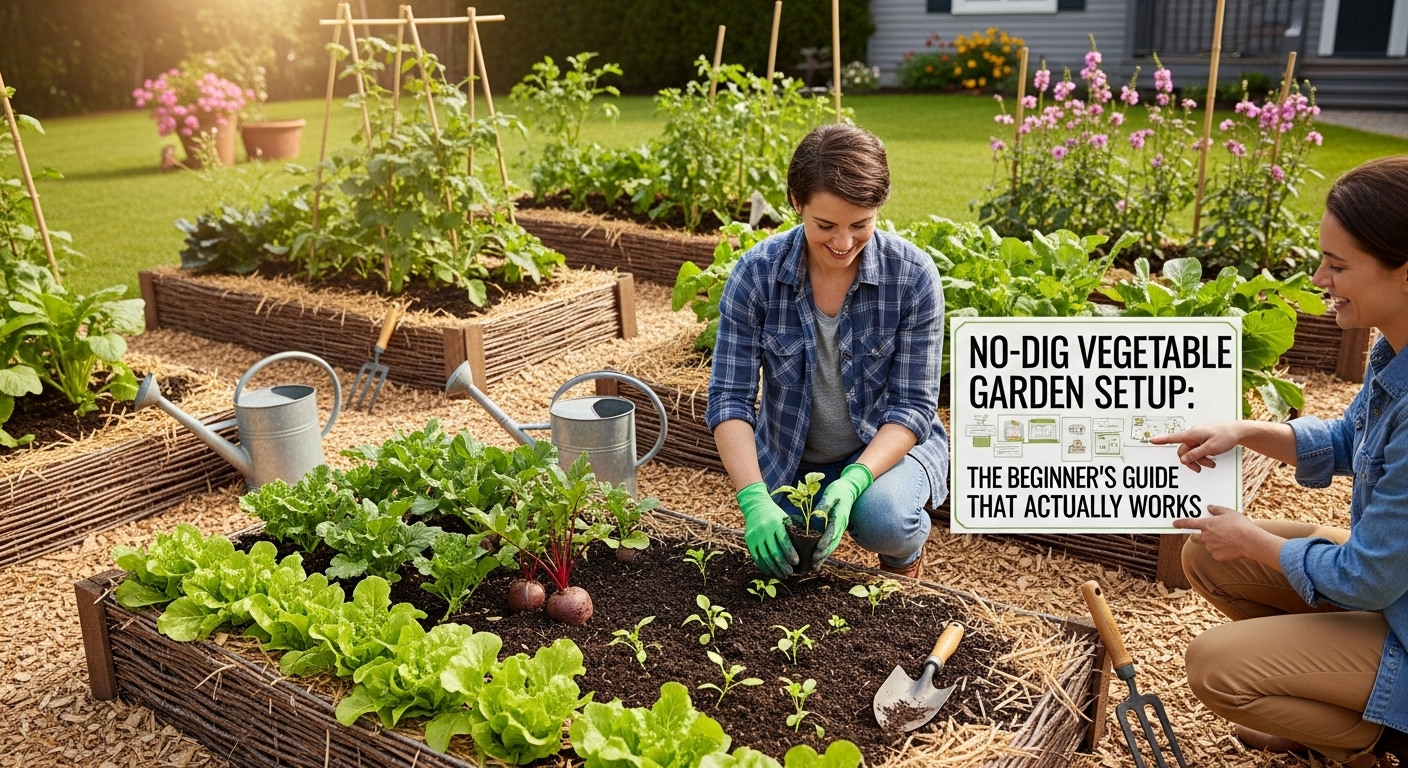
Most beginner gardeners fail before their first harvest. Not because they lack motivation, but because they start by digging, tilling, and disturbing soil that already knows how to grow plants. Traditional gardening methods often create more problems than they solve.
This guide explains exactly how to build a no-dig garden from scratch and make it productive in the first season.
What Is a No-Dig Vegetable Garden and Why Does It Work?
A no-dig vegetable garden is a layered soil-building method that avoids turning or disturbing soil. Instead of digging, organic materials like compost and mulch are added on top. This protects soil organisms, improves structure naturally, reduces weeds, and creates long-term fertility with minimal labor.
A no-dig system works because soil is already a living ecosystem. Worms, fungi, bacteria, and microbes naturally loosen soil and transport nutrients. Digging interrupts that process.
When soil stays undisturbed, fungal networks remain intact. These networks help plants access nutrients more efficiently. Moisture retention also improves because soil pores stay stable.
Instead of breaking soil each season, the gardener feeds it from above. Over time, this creates dark, loose, fertile soil that supports strong root systems.
Another advantage is reduced weed pressure. Weed seeds buried deep in soil stay inactive. Only surface weeds need management.
This method also lowers physical effort. Beginners can start growing vegetables without heavy tools or machinery.
Why Should Beginners Choose the No-Dig Gardening Method?
No-dig gardening is ideal for beginners because it simplifies soil preparation, reduces maintenance time, improves crop success rates, and requires fewer tools. It prevents common early mistakes like over-tilling, nutrient loss, and soil compaction that often reduce yields in traditional vegetable gardens.
Traditional gardening often begins with digging large beds. This removes soil layers that developed naturally over years.
Beginners usually disturb beneficial organisms without realizing it. As a result, plants grow slowly and require fertilizers earlier.
No-dig gardening avoids this issue entirely. Compost layers feed soil gradually instead of forcing artificial fertility cycles.
The method also improves water efficiency. Mulched surfaces reduce evaporation and maintain consistent moisture levels.
Beginners benefit from predictable results. Even poor soil conditions improve quickly after layering compost and mulch.
Most importantly, this system scales easily. Gardeners can expand beds season by season without restarting soil preparation.
How Do You Start a No-Dig Vegetable Garden Step by Step?
Start a no-dig vegetable garden by choosing a sunny location, covering existing ground with cardboard, layering compost on top, adding mulch for protection, and planting directly into the compost layer. This process builds fertile soil without disturbing the ground underneath.
First, choose a site receiving at least six hours of sunlight daily. Vegetables require consistent exposure to produce strong yields.
Next, remove large weeds but leave roots in place. Roots decompose and improve soil structure.
Lay plain cardboard over the surface. Overlap edges to block light completely. This suppresses weeds naturally.
Water the cardboard thoroughly before adding compost. Moisture activates decomposition.
Add a 5–10 cm layer of finished compost across the surface. This becomes the planting zone.
Top with organic mulch such as straw or dry leaves.
Follow this simple setup checklist:
- Select full-sun garden space
- Flatten tall weeds without digging
- Cover soil with overlapping cardboard sheets
- Soak cardboard with water
- Add compost layer evenly
- Apply protective mulch layer
- Plant immediately after setup
This method works on grass, clay soil, or compacted ground.
What Materials Are Needed for a Successful No-Dig Garden?
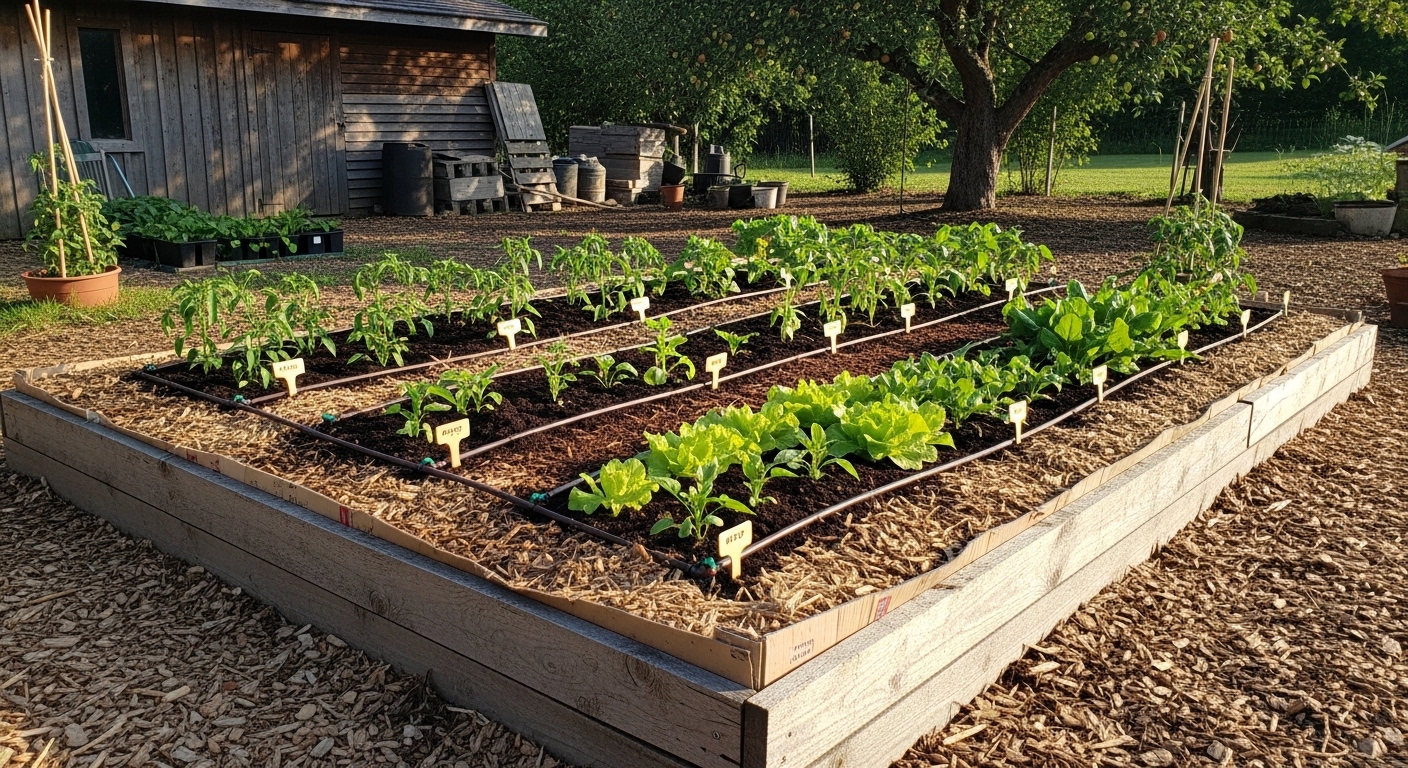
A successful no-dig garden requires cardboard for weed suppression, compost for fertility, mulch for moisture retention, and optional edging materials for structure. These simple components replace traditional soil digging and create productive growing beds quickly.
Most materials are inexpensive or locally available. Compost is the most important element because it feeds soil microbes directly.
Cardboard blocks sunlight and prevents weed regrowth. It decomposes naturally within months.
Mulch stabilizes temperature and reduces evaporation. It also protects soil organisms from exposure.
Optional edging improves layout clarity but is not required.
| Material | Purpose | Recommended Thickness |
|---|---|---|
| Cardboard | Blocks weeds | 1–2 layers |
| Compost | Provides nutrients | 5–10 cm |
| Straw mulch | Retains moisture | 3–5 cm |
| Dry leaves | Improves structure | 3–5 cm |
| Wood chips (optional) | Pathway coverage | 5–8 cm |
Using quality compost significantly improves early harvest success.
How Do You Maintain a No-Dig Vegetable Garden Throughout the Season?
Maintain a no-dig vegetable garden by adding compost each season, keeping soil covered with mulch, watering consistently, and removing surface weeds early. These simple actions preserve soil structure and maintain fertility without disturbing underground ecosystems.
The key rule is never leaving soil exposed. Bare soil dries quickly and loses nutrients.
Add compost between crops or before planting new vegetables. This refreshes nutrients naturally.
Mulch should remain visible throughout the growing season. Replace it when it decomposes.
Water slowly and deeply. Compost-rich soil holds moisture longer than tilled beds.
Follow this seasonal maintenance routine:
- Inspect mulch weekly
- Remove young weeds immediately
- Add compost between crop rotations
- Water early morning when possible
- Protect beds during heavy rainfall
These steps keep soil productive year after year.
Which Vegetables Grow Best in a No-Dig Garden?
Leafy greens, root vegetables, tomatoes, beans, cucumbers, and herbs grow especially well in no-dig gardens because loose compost layers support root expansion, retain moisture efficiently, and provide steady nutrients without disturbing soil biology.
Fast-growing vegetables benefit immediately from compost-rich beds. Lettuce, spinach, and coriander produce early harvests.
Root vegetables grow straighter in soft compost layers compared to compacted soil.
Fruit-bearing crops like tomatoes respond strongly to stable moisture conditions.
Beginner-friendly crop choices include:
- Lettuce
- Spinach
- Radish
- Tomato
- Beans
- Cucumber
- Mint
- Coriander
These crops establish quickly and confirm soil improvement within one season.
How Long Does It Take for a No-Dig Garden to Improve Soil Quality?
Most no-dig gardens show improved soil texture within one growing season, while deeper fertility develops over six to twelve months as compost decomposes and soil organisms rebuild structure naturally. Continued compost layering strengthens results every year.
Early improvements appear quickly. Soil becomes darker and easier to plant within weeks.
Worm activity increases noticeably after the first mulch layer settles.
By the second season, moisture retention improves significantly.
Long-term benefits include stronger root systems and reduced fertilizer dependency.
Each additional compost layer compounds soil fertility.
This creates a self-sustaining garden system that becomes easier to manage over time.
What Mistakes Should Beginners Avoid When Starting No-Dig Gardening?
Common beginner mistakes include using unfinished compost, leaving soil uncovered, applying thin compost layers, planting too densely, and skipping seasonal top-ups. Avoiding these errors ensures faster soil improvement and stronger vegetable growth.
Thin compost layers reduce effectiveness. Always apply enough material to support planting depth.
Fresh compost can damage roots. Use mature compost only.
Leaving exposed soil allows weeds to return quickly.
Overcrowded plants compete for nutrients and slow growth.
Avoid these common setup problems:
- Using glossy cardboard with ink coatings
- Skipping mulch layer
- Planting before watering base layers
- Ignoring sunlight requirements
- Overwatering compact areas
Correct setup prevents most beginner failures.
Conclusion: Why No-Dig Gardening Is the Simplest Way to Grow Vegetables Successfully
No-dig gardening works because it follows natural soil processes instead of fighting them. Instead of rebuilding soil every season, gardeners strengthen it gradually using compost and mulch.
This reduces weeds, saves time, improves moisture retention, and increases harvest reliability. Beginners especially benefit because the method removes technical barriers that often cause early frustration.
Even small backyard spaces can become productive within weeks using layered organic materials. Over time, soil improves automatically without heavy labor.
Start with one small bed, apply compost generously, and maintain mulch coverage consistently. Results appear quickly and continue improving each season.
The simplest gardening systems are usually the most sustainable. A no-dig vegetable garden proves that productivity does not require complexity.
Choose a sunny space today and build your first no-dig bed. Your future harvests will depend on what you start now.
Frequently Asked Questions
Can I start a no-dig garden on grass?
Yes. Place cardboard directly over grass and cover it with compost and mulch. The grass decomposes naturally underneath and becomes part of the soil structure without needing removal.
How thick should compost be in no-dig beds?
A compost layer between 5 and 10 cm supports most vegetables effectively. Thicker layers improve moisture retention and reduce weed pressure further.
Is digging ever required in no-dig gardening?
No digging is required after initial setup. Soil organisms naturally loosen soil and distribute nutrients, replacing the need for manual cultivation.
Can I plant immediately after building the bed?
Yes. Seeds and seedlings can be planted directly into compost layers as soon as mulch is applied and watered properly.
Does no-dig gardening reduce weeds permanently?
No method removes weeds completely, but cardboard and mulch reduce weed growth significantly and make removal easier.
How often should compost be added?
Add compost once or twice per growing season to maintain fertility and support soil organisms responsible for nutrient cycling.
Is no-dig gardening suitable for small urban spaces?
Yes. Raised beds, containers, and narrow backyard plots all benefit from no-dig layering methods and show fast soil improvement.
Read More Also: How to Prepare Soil for Spring Planting (Expert Guide)
Learn More: How to Increase Flowering in Plants Naturally