
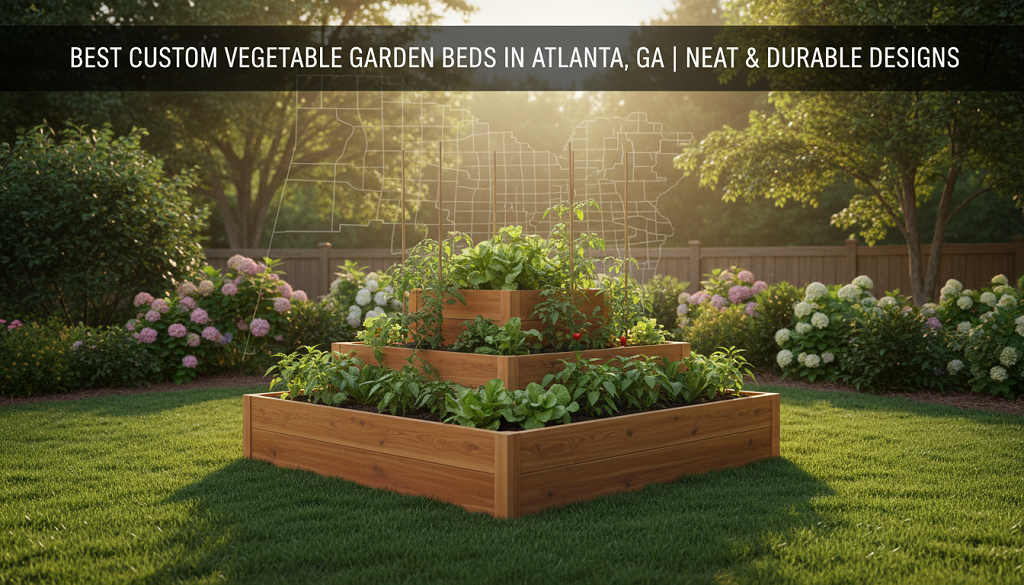
The best custom vegetable garden beds in Atlanta, GA are raised, durable, well-drained planting structures built with materials like cedar, composite boards, stone, or metal that match local soil conditions and climate patterns while improving yield, accessibility, and layout efficiency.
Many Atlanta homeowners struggle with clay-heavy soil, poor drainage, and irregular yard layouts. Custom vegetable garden beds solve these problems by creating controlled planting environments that improve root growth, reduce weeds, and increase productivity. Whether installed in a backyard, rooftop, patio edge, or suburban lawn, raised garden beds provide structure and long-term usability.
According to multiple university extension studies, raised beds can improve vegetable yield by up to 1.5–2× compared with unmanaged ground soil when drainage and organic matter are optimized. In humid regions like Georgia, this advantage becomes even more important.
This guide explains how custom vegetable beds work, which materials perform best in Atlanta’s climate, what layouts increase productivity, and how homeowners can design neat, durable vegetable gardens that last for years.
Why Do Atlanta Homeowners Choose Custom Vegetable Garden Beds Instead of Traditional Rows?
Atlanta homeowners choose custom vegetable beds because they improve drainage, simplify maintenance, and increase planting efficiency in clay-heavy Southern soil.
Problem: Georgia soil often contains dense clay that compacts easily and drains slowly. Traditional row planting makes roots vulnerable to standing water, pests, and weeds.
Agitation: This leads to reduced harvest size, inconsistent plant growth, and frequent replanting cycles. Many homeowners abandon backyard gardening because maintenance becomes too time-consuming.
Solution: Custom raised beds create a controlled soil environment that supports healthier vegetables with less effort.
- Improved drainage during heavy rain seasons
- Better root aeration for tomatoes and peppers
- Reduced weed competition
- Faster soil warming in early spring
- More organized garden layout
- Cleaner harvesting experience
Raised bed gardening is especially effective in metro Atlanta neighborhoods where yard space is limited and soil quality varies between properties.
What Materials Are Best for Custom Vegetable Garden Beds in Atlanta’s Climate?
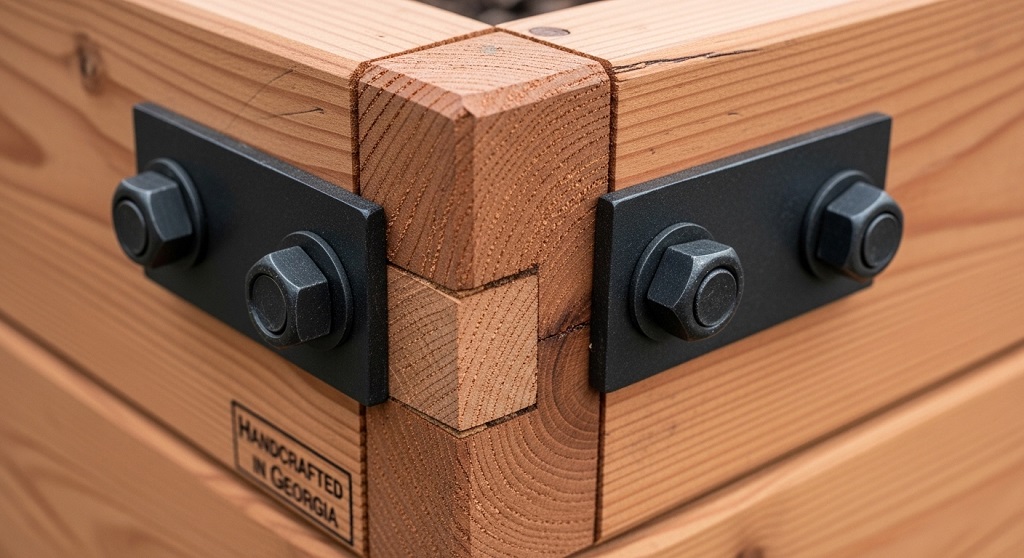
The best materials for vegetable garden beds in Atlanta include cedar wood, composite boards, galvanized steel, brick, and natural stone because they resist humidity, insects, and long-term soil exposure.
Cedar Raised Beds
Cedar naturally resists rot and insects without chemical treatment. Many Atlanta gardeners prefer cedar for backyard vegetable beds because it balances durability and appearance.
Composite Garden Bed Frames
Composite materials last longer than untreated wood and require minimal maintenance. They perform well in humid Southern environments.
Galvanized Steel Beds
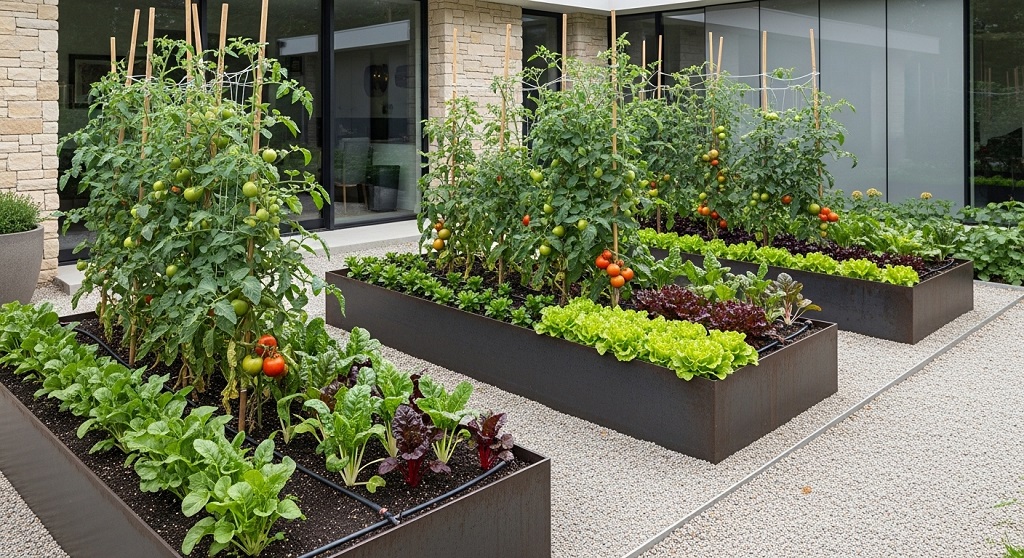
Steel beds reflect heat and extend growing seasons slightly by warming soil faster in early spring. They also resist termite damage.
Brick or Stone Beds
Stone and brick raised beds are ideal for permanent garden layouts. They improve visual structure and integrate well into landscape architecture.
| Material | Durability | Maintenance | Best Use Case |
|---|---|---|---|
| Cedar | 10–15 years | Low | Backyard raised beds |
| Composite | 20+ years | Very low | Modern garden layouts |
| Steel | 20+ years | Very low | Urban vegetable gardens |
| Brick/Stone | Permanent | Minimal | Luxury landscape gardens |
How Do Custom Vegetable Garden Beds Improve Harvest Yield in Georgia Soil?
Custom raised beds improve harvest yield by optimizing drainage, nutrient density, and planting spacing.
University extension agriculture research shows raised beds can increase vegetable production by improving root-zone aeration and reducing soil compaction. In humid Southeastern climates, this leads to measurable improvements in:
- Tomato productivity
- Lettuce growth cycles
- Pepper fruit size
- Root vegetable uniformity
Raised beds also allow gardeners to control soil blends. A common Atlanta mix includes:
- 40% compost
- 40% topsoil
- 20% aeration material (pine bark fines or sand)
This mixture performs better than native clay soil alone.
What Layout Designs Make Vegetable Garden Beds Look Neat and Organized?
The neatest vegetable garden layouts use symmetrical spacing, defined pathways, and modular bed placement for accessibility and visual balance.
Many structured garden layouts seen in European kitchen gardens follow a grid pattern. This concept adapts well to Atlanta residential landscapes.
Popular Layout Options
- Parallel raised bed rows with walking paths
- Square foot gardening grids
- U-shaped kitchen garden layouts
- Perimeter planting beds along fences
- Central focal-bed courtyard gardens
Organized layouts reduce maintenance time and improve irrigation efficiency.
Which Vegetables Grow Best in Raised Garden Beds in Atlanta, GA?
The vegetables that grow best in Atlanta raised beds include tomatoes, peppers, cucumbers, beans, lettuce, spinach, carrots, and squash.
Georgia’s long growing season allows multiple planting cycles per year. Raised beds help extend these cycles by improving soil temperature control.
Spring Crops
- Lettuce
- Spinach
- Radishes
- Carrots
Summer Crops
- Tomatoes
- Peppers
- Eggplant
- Cucumbers
Fall Crops
- Kale
- Broccoli
- Turnips
- Mustard greens
How Tall Should Custom Vegetable Garden Beds Be for Maximum Efficiency?
The ideal raised garden bed height in Atlanta ranges between 10 and 18 inches depending on crop type and drainage needs.
- 10–12 inches for herbs and leafy greens
- 12–15 inches for peppers and beans
- 15–18 inches for tomatoes and root crops
Deeper beds allow stronger root development and better water retention during Georgia’s summer heat.
How Do Custom Raised Beds Help Control Weeds and Pests?
Custom garden beds reduce weeds and pests by isolating planting soil and improving spacing between crops.
Weed seeds spread easily through untreated ground soil. Raised beds block this spread by creating defined planting zones.
Additional pest-control benefits include:
- Improved airflow between plants
- Better crop rotation management
- Easier installation of netting or row covers
- Reduced fungal disease spread
Are Custom Vegetable Garden Beds Suitable for Small Atlanta Backyards?
Yes, custom raised beds are ideal for small Atlanta backyards because they maximize planting density while keeping layouts compact and accessible.
Urban gardeners often use:
- Corner beds
- Tiered beds
- Vertical trellis-supported beds
- Patio-edge raised boxes
These solutions allow productive gardening even in limited square footage.
How Much Do Custom Vegetable Garden Beds Cost in Atlanta, GA?
The average cost of custom vegetable garden beds in Atlanta ranges from $150 to $1,200 depending on size, materials, and installation complexity.
| Bed Type | Estimated Cost |
|---|---|
| DIY wood raised bed | $150–$350 |
| Composite custom bed | $400–$800 |
| Stone permanent bed | $900–$1,200+ |
Costs vary based on soil preparation and irrigation integration.
Do Custom Vegetable Beds Increase Property Value in Atlanta?
Yes, structured garden beds can increase perceived property value by improving landscaping usability and visual organization.
Real estate staging research shows outdoor functional features influence buyer impressions, especially in suburban markets where backyard usability matters.
Well-designed vegetable beds signal sustainability, lifestyle convenience, and landscape planning quality.
How Can Atlanta Homeowners Maintain Raised Vegetable Garden Beds Year-Round?
Year-round maintenance includes seasonal soil refreshment, mulch application, crop rotation, and irrigation monitoring.
- Add compost twice yearly
- Replace mulch before summer heat peaks
- Rotate crops every season
- Install drip irrigation systems
- Inspect wood frames annually
These steps extend bed lifespan and improve harvest consistency.
Conclusion: Are Custom Vegetable Garden Beds Worth Installing in Atlanta?
Yes, custom vegetable garden beds are one of the most practical upgrades Atlanta homeowners can make for productive backyard gardening. They improve soil control, increase harvest yield, reduce maintenance time, and create organized outdoor spaces that remain functional for years.
Instead of struggling with dense clay soil and unpredictable drainage, raised beds provide structure that supports reliable vegetable production across multiple growing seasons. Whether installed in a suburban lawn, patio garden, or compact urban yard, they make gardening easier and more efficient.
If you want a cleaner layout, healthier crops, and long-lasting garden performance, investing in custom vegetable garden beds is a smart next step. Start planning your Atlanta garden layout today and transform your outdoor space into a productive growing area.
Frequently Asked Questions About Custom Vegetable Garden Beds in Atlanta, GA
What soil mix works best for raised vegetable beds in Atlanta?
The best soil mix combines compost, screened topsoil, and pine bark fines to improve drainage and nutrient retention in Georgia’s clay-heavy environment.
When is the best time to install raised garden beds in Atlanta?
Late winter and early spring are ideal installation periods because they allow soil preparation before peak planting season begins.
Do raised garden beds require irrigation systems?
Raised beds benefit from drip irrigation because they drain faster than ground soil and require consistent moisture levels.
How long do cedar raised garden beds last in Georgia?
Cedar raised beds typically last 10–15 years depending on exposure to moisture and maintenance practices.
Can raised beds prevent root rot in humid climates?
Yes, improved drainage significantly reduces root rot risk in vegetables grown in humid Southeastern environments.
Are metal raised beds safe for vegetable gardening?
Galvanized steel beds are safe and widely used because they resist corrosion and maintain structural strength over time.
Read More Also: How to Increase Flowering in Plants Naturally
Discover More: How to Prepare Soil for Spring Planting (Expert Guide)