
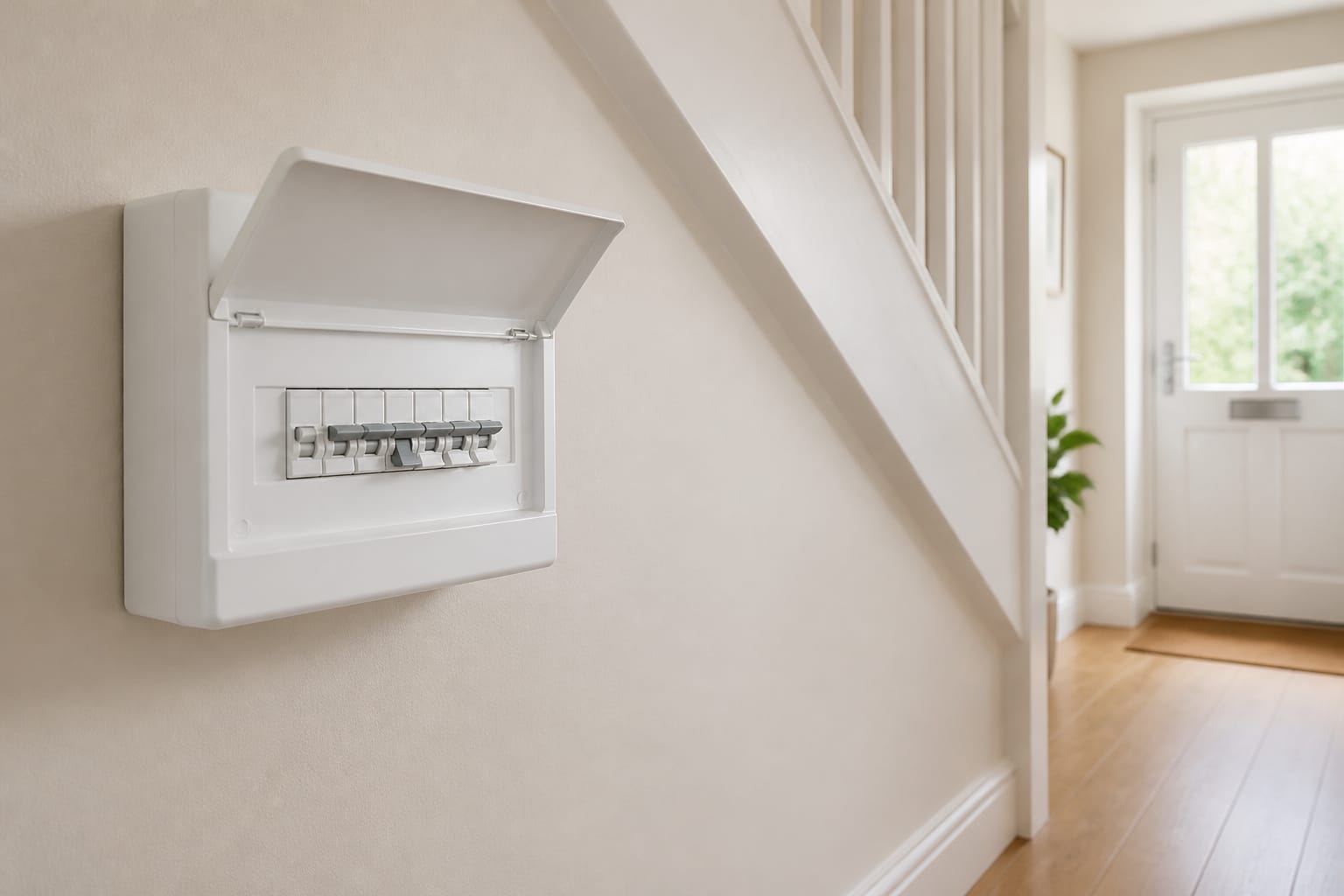
It can take a number of trips before a breaker “gives up” and needs to be replaced. Knowing what is going on before it fails can be very useful.
Too Many Appliances on One Circuit
Overloading a circuit with too many appliances on it is probably the most common reason for a trip. For example, a kettle, toaster and heater on the same circuit can exceed the wiring capacity and trip the RCD/MCB to prevent a fire caused by overheating of the cable. Try distributing the loads on the circuit to other circuits to see if the problem goes away.
A Short Circuit in Wiring or an Appliance
Short Circuits in Wiring or Appliances: Short circuits can be caused by live wires touching neutral or earth wires. Common causes of short circuit faults are damaged insulation on wiring, damaged cables, worn cords and faulty appliances. The Electrical Safety Foundation International says that faulty wiring and worn cords are two of the most common causes of electrical fires in the home. So do not ignore short circuit trips. Instead take action and try to find the cause of the fault as soon as possible.
Ground Fault Tripping
Ground faults are over current situations that occur when current flows to ground by way of an unauthorized path. This could be by way of dampness, worn out parts on an appliance, water leaking into a room that contains outlets, etc. This type of fault will typically cause a breaker to trip immediately upon closing the switch to an appliance that is affected by the fault. It will also typically cause a breaker to trip every time the affected switch is cycled on and off. See also Electrician Williamsport PA.
An Old or Worn Breaker
Over time the internal mechanism within a breaker can deteriorate. As a result the breaker can now trip at lower loads than it did when new. A worn breaker could now be tripping for reasons that would have previously gone undetected. If a breaker is tripping with little connected to the circuit or even appears to be loose or even hot in the electrical panel then it probably needs to be replaced.
Arc Fault Tripping and Loose Connections
Most newer electrical panels are equipped with what are known as AFCI (Arc Fault Circuit Interrupter) breakers. This type of breaker is designed to detect what are called “electrical arcs” that can be produced by loose electrical connections, worn or damaged electrical cords, or even old electrical switches. Note that arc fault breakers can “trip” for reasons other than a true short circuit, and some appliances such as those with motors (as found in window air conditioning units) as well as those that contain dimmer switches can trigger arc fault breakers under normal operation. Also, arc fault breakers are required to be installed in a safe manner according to the federal regulations governing workplace electrical safety, as work within electrical panels is inherently hazardous and therefore not a “do it yourself” project.
Simple Checks Before Calling an Electrician
Unplug all of the products on the affected circuit and go to reEngage the breaker. Now plug in one product at a time to see if it will make the breaker to go to engage. Look for any signs of physical damage on the wire, cord, or plug. Determine if there is an immediate engagement of the breaker or if it takes a while to engage. If the breaker will continuously engage when there is nothing plugged into the circuit or when you continue to try to make the engagement go away, then there is a problem with the wiring or the breaker itself and you will need to call in a professional licensed electrician in Williamsport, PA to fix the problem.
Your circuit breaker is meant to protect your home from electrical damage caused by small problems before they become bigger ones.