
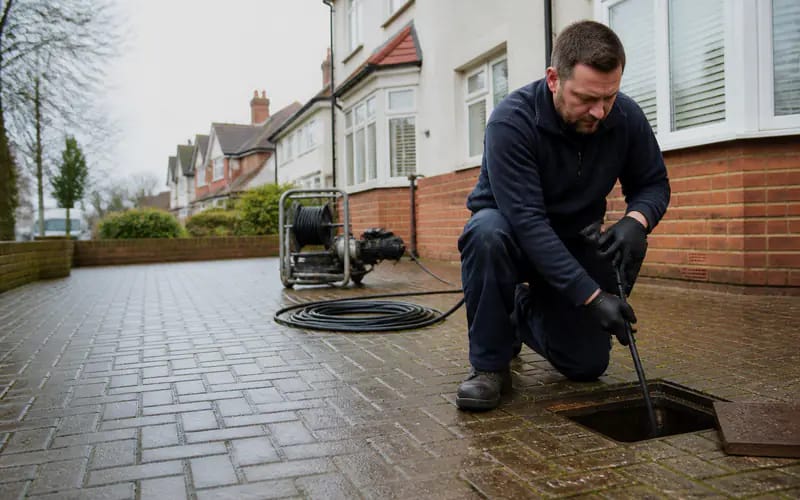
Most persistent drain blockages require more than a simple rod and if your blockage keeps coming back then Drain Jetting is likely to be the best solution. In this article we explain what Drain Jetting actually is and what to expect from a technician carrying out the work.
What Drain Jetting Actually Is
High pressure water jetting involves using a flexible hose which is fed into the drain, the end of the hose is fitted with a nozzle. This nozzle fires a stream of water at extremely high pressure which will strip any debris from the walls of the pipes and then wash it away with the flow of water, removing the blockage from the system.
Blockages It Clears Well
Jetting is particularly effective at clearing grease and fat blockages. Over time, these can harden to form a stubborn narrowing of the pipe walls. Other types of blockage that are particularly suited to water jetting include soap scum, silt, scale from hard water and small amounts of root intrusion into a joint. While rodding may clear a blockage by punching a hole through it, the blockage can return within weeks. Jetting, however, cleans the pipe thoroughly and permanently.
How Nozzle Choice Changes the Result
When booking a drain jetting service the type of nozzle used at the end of the hose can greatly affect the outcome of the clean. Typically there are 2 main types of nozzles used for drain cleaning, these are the rotating jet nozzle and the penetrating jet nozzle. The rotating jet nozzle is typically used for cutting through very stubborn grease blockages and the penetrating jet nozzle is used for clearing silt blockages and also very dense blockages that are further down the drain.
Why Pressure Isn’t Everything
More pressure is not necessarily better when it comes to drain clearing. The older clay drains in particular can suffer from damage caused by higher pressures. As well as this, partially collapsed or cracked pipes, or even those that have shifted slightly within the ground, can also be damaged by higher pressures. As such, the amount of pressure used, and the flow rate, must be appropriate for the age and type of pipe. See also Drainage Services.
Why a Camera Check Usually Comes First
After the drain survey, the cabling can be removed and a drain jetting machine can be connected to the drain to clear the blockage. It is recommended that a camera inspection is carried out before any jetting takes place to determine the severity of the blockage and to establish whether or not a simple clean out is required or if there are more serious structural problems with the drainage system.
What Happens During a Visit
We start by locating the access point to the drain such as a manhole or inspection chamber and then assess the immediate area to make sure it is safe to work in. We then feed the hose down the drain until we reach the blockage, work the nozzle round until clean and then flush the hose out to clear any debris of the blockage. We then check flow at the next access point to make sure all is well and that the drain is flowing freely. Most jobs are completed within the hour, although in some cases where a blockage has been present for a long time it can take some time to work round the blockage.
When Jetting Isn’t Enough
As previously stated, drain jetting is not suitable for damage such as a collapsed section of pipe, pipes that have sagged or been displaced in any way, or root ingress through the pipe wall as opposed to entering through a drain pipe joint. Such damage will require excavation to either replace damaged pipe(s) or to carry out lining to form a new pipe within the existing. Although the blockage will have to be cleared to inspect the full extent of the damage, the main work will be to complete the repair works.
Keeping Blockages From Coming Back
Prevent future blockages to a kitchen drain, such as those located near heavy cooking areas, by having periodic drain jetting carried out every 6 to 12 months. Be aware that drains outside your boundary, such as public drains, are the responsibility of the water company. A blocked public drain can be reported to your water company however, it is best to first establish who is responsible for what. The water and sewerage regulator body oversees how the water companies manage their shared drains, such as sewers. The environmental guidance on surface water drainage from the Environment Agency provides information on issues with blocked drain causes such as flooding or other blockage problems that may have been caused by surface water drainage issues during periods of heavy rain.
However, a persistent problem will require more than the same old solution. Knowing what jetting is and how the use of pressure, the choice of nozzle and the state of the drains all affect the nature of the work required to clear a blocked drain helps to frame the right questions to get the best service from your chosen Drainage Company.