
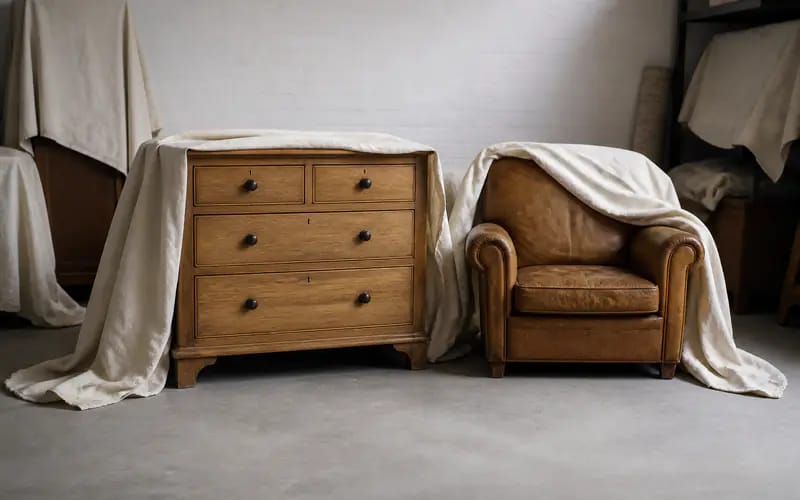
Many items need more protection when in storage than can be provided in a standard storage unit. However, most household items will be stored safely in a normal storage unit. It is those items of special value or with sensitive materials that require a little more thought and could benefit from a climate controlled storage space.
What Climate Control Actually Does
In addition to controlling the temperature of your storage, climate control manages the humidity as well. The air is kept at a constant and comfortable temperature and humidity level, which is typically around 13-21 degrees Celsius and 40-60% relative humidity. This is far more important than simply not allowing your items to freeze or overheat.
Wooden and Leather Furniture
Solid wood items such as antique furniture, chests, drawers and quality sofas and beds can all suffer from being stored in damp conditions. If the item is made of solid timber then it will expand when it gets damp and then shrink as it dries out. This repeated cycle of getting damp and then drying out can cause massive problems with items such as joints coming loose, veneer peeling off and panels cracking. Leather items such as handbags, belts, shoes and furniture can also suffer from being stored in damp conditions. In damp conditions mould can form on leather items and in dry conditions leather can become stiff and cracked.
Electronics, Instruments and Vinyl
Condensation is the biggest killer of stored goods. This occurs when a cold storage unit is opened and allowed to warm up quickly, or when a warm unit is left to cool down slowly. Moisture in the air can then form on surfaces of goods and within them. Guitar bodies, violin pegs and speaker cones are all particularly prone to cracking as the wood in them changes size with humidity. Vinyl records can also suffer from warping, and mould can grow on labels and within sleeves. Hi-fi gear, guitar collections and boxes of vinyl records all benefit from climate controlled storage for longer than a few weeks.
Paper, Photographs and Artwork
Paper can be very fragile and cockle, have ink run or even fade when exposed to changes in humidity. It can also develop mould within weeks in a storage space that is consistently damp. The National Archives web site has lots of advice on the safe storage of documents and photographs and it is clear that the most important factor is to store them in a stable environment and that extreme temperatures are less important than fluctuating humidity. Family photos, certificates, artwork and important paper work that you could not live without should definitely be stored in a climate controlled storage space.
Wine, Film and Specialist Collections
There are some items stored in self storage that you would be surprised to find are affected by conditions outside of the normal range for climate control storage. So wine, old film, model kits and similar items are all best stored in a facility that can maintain conditions within a very tight band. But if you are a collector of such items then you probably already know this. What about the rest of us?
Batteries, Seals and Medical Kit
If you’re storing things with batteries, rubber seals, or items with hydraulic fluids then extreme cold can cause problems. Batteries can lose charge and leak in very cold conditions. Rubber seals on equipment cases and medical devices can become hard and crack. Some diagnostic equipment has manufacturer storage temperature limits. It’s best to check with the manufacturer of your equipment to see if climate control storage is required for long-term storage.
How UK Seasons Affect Standard Units
Most items will suffer little or no harm in an unheated storage unit. The temperature in unheated storage units does fluctuate greatly however and the unit will be hot during the day and cold at night. In the winter months, damp air will enter the unit and then condense on the cold surfaces. This can become a problem in poorly ventilated unheated storage units over long periods of time.
A Simple Cost Versus Risk Check
An item of furniture may be stored in a standard unit but it’s worth asking three questions before deciding on the storage facility: 1) What is the item likely to cost to repair or even replace? 2) Is it possible to purchase an identical item? 3) Are there any materials used in the item’s construction that are natural? If the answer to the last question is yes then it’s probably worth paying a little more for climate control storage. Items that are sensitive and contain a lot of electrical or mechanical parts are also best stored in a climate controlled storage unit. For Self Storage Dudley, visit Anchor Self Storage.
For most items that people are storing, such as furniture and household goods, standard units are fine. It is the more unusual items of special significance, such as family treasures, sensitive items or specialist collections, that require some extra thought and it is well worth spending a little time to get this right to avoid potential problems later.