
Underneath our feet, buried deep inside the earth are a wealth of amazing things – from long extinct creatures and lost civilisations to the fossil fuels that power modern life, the ground underneath us is full of fascinating finds and is a great way to find out more about the history of the planet and the creatures that have inhabited it.
Many of the things that have been found in the ground have changed our knowledge of the past and have also changed how we do things in the future – here are some of the many amazing things that are under the ground…
Fossil Fuels
These are perhaps one of the most valuable finds that have had the greatest impact on human life on earth – from the technology and the industry that has formed around them, to wars that are started over them, fossil fuels are something that have had a huge impact on civilisations and human history as a whole.
Natural gas, oil and coal are all remains of ancient organisms from millions of years ago. Tiny marine creatures like plankton, as well as plants have laid under layers of sediment and the heat and the pressure over time turned this into these substances beneath the layers of rocks.
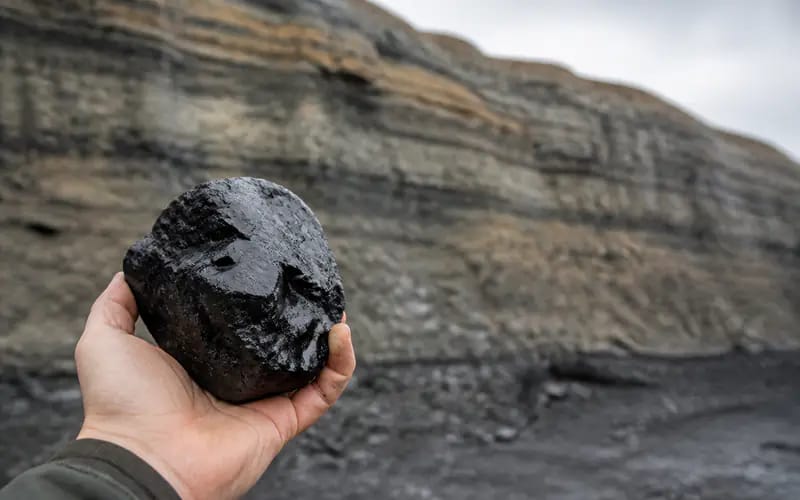
Coal played a huge role in the industrial revolution – from steam trains to furnaces, coal has been an important source of power and heat over the years. It is formed in swampy places where the ancient vegetation accumulates. As it is crushed, it forms coal seams in the rocks. It is not commonly used in the UK nowadays and it was the source of a lot of political upheaval in coal mining regions in the UK in the 1980s, as most of the coal pits were closed and many people lost their incomes.
Oil, which is also petrol is something that tends to be found in ancient seabeds, which is why much of it today is still found in the sea, however not all of it. Made of marine organisms that have gradually been squashed into the rocks – oil is most well known for providing petrol for cars and other vehicles to run on but is also important for making chemicals. The main oil producing regions include the Middle East, Russia and the United States.
Natural gas is usually found alongside oil – if you have a gas boiler, this is what powers it – of course it is very flammable so must be treated with care, which is why you must always have a professional like this Cheltenham boiler service expert to service your boiler.
The K-PG Layer
This innocuous looking layer that runs through rocks around the world doesn’t look much and is hardly noticeable – however to geologists and palaeontologists it is a remarkable source of evidence and one of the most fascinating finds ever made.
Around 66 million years ago, a large asteroid hit the Earth just off the coast of what is modern day Mexico. This was something that changed the history of life on Earth and wiped out around three quarters of all life on earth due to the catastrophic environmental impact of this event that lasted for many years afterwards.
The K-PG layer is in fact evidence of this event and marks the point at which the dinosaurs reign on earth was over and the mammals started to become more dominant, as well as birds, the closest living relatives of the dinosaurs.
The huge impact distributed debris all over the planet – and it is within this layer that scientists discovered large amounts of iridium, something that is rare on earth but commonly found in asteroids. This evidence was a great help in the theory that the dinosaurs were made extinct by this giant asteroid impact.
To see this remarkable piece of Earths history for yourself there are some places where this layer is exposed and accessible. Stevns Klit in Denmark is one of the best – a UNESCO world heritage site, you can see along the cliffs the thinner dark layer that separates the older rock from the rock that formed after the dinosaurs. Other places to see this include Big Bend national Park in Texas and Gubbio in Italy.
Historical Finds
Of course, there are plenty of treasures buried under the ground that are part of human history too. These discoveries can help archaeologists and historians to get an insight into how people used to live in the past, and to help understand civilisations from long ago.
Something that can be found if you own a metal detector are old coins – these can tell historians about how life was in certain time periods, such as Anglo-Saxon coins, and also Roman coins, both of which can be found around the British Isles.
Some amazing discoveries under the ground are made entirely by accident – for example, in 1963 in Turkey, someone who was renovating their home knocked down a wall and discovered the remains of an enormous underground city! Upon further investigation, the city of Derinkuyu stretched hundreds of feet and in places was around 18 levels deep!
In China, a man who was doing some repairs to a sewage ditch discovered the remains of some bronze age pits, which were then discovered to be packed with treasures of the era such as huge bronze sculptures and gold!
A little closer to home, when the construction for Crossrail near to Liverpool Stret station was being done, the remains of a burial ground were found from around the time of the plague, containing thousands of skeletons!