
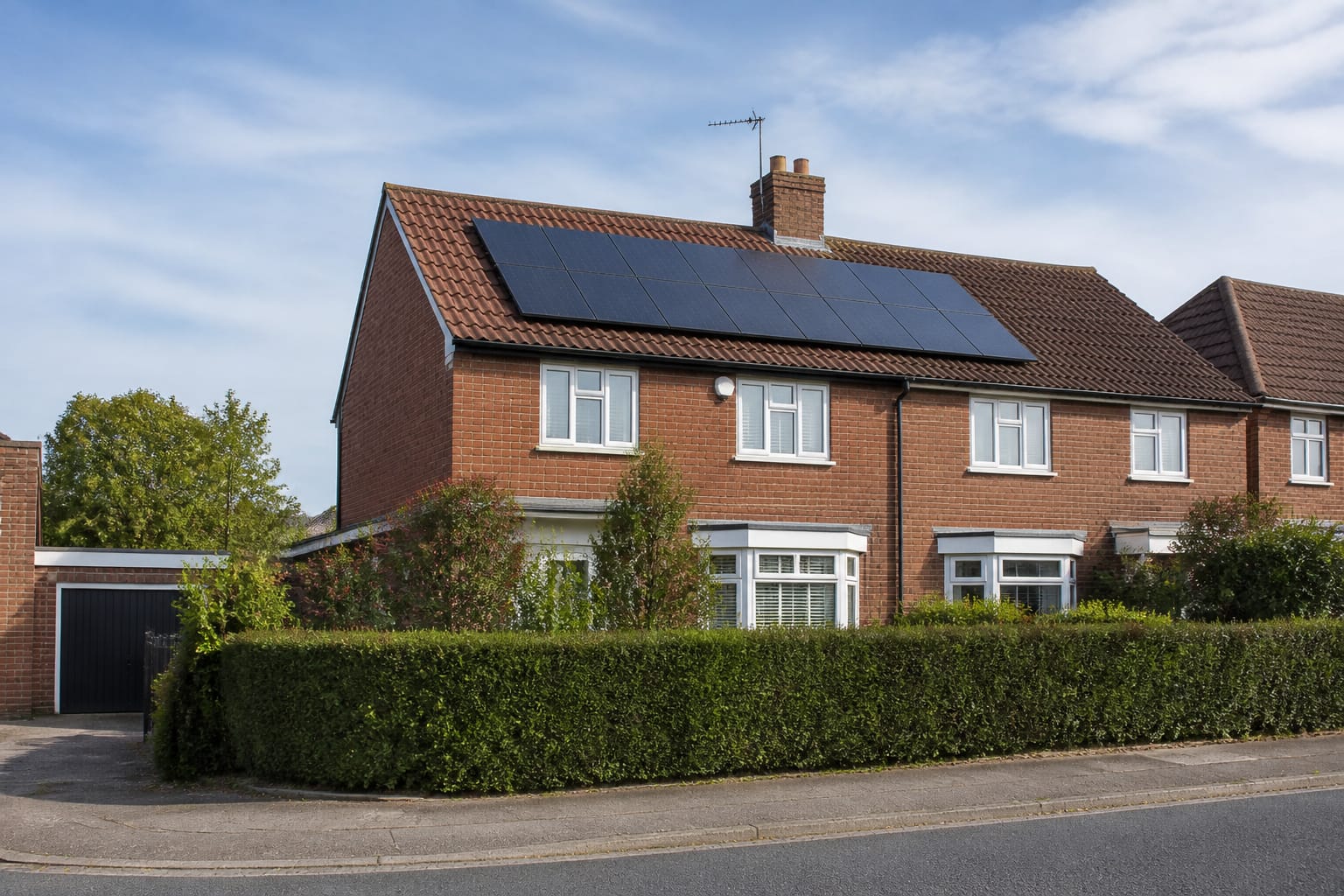
While not every roof can support solar panels, most are more suitable than people give them credit for. So what makes a good roof for solar panels and what should you check before getting a quote from a supplier?
Roof Orientation Matters Most
A south-facing roof is generally best for solar panels as it receives the most sunlight throughout the year. East- or west-facing roofs will also generate a lot of electricity, losing around 10-20% compared to a south-facing roof. This means that many homes with these types of roofs can benefit from solar panels. However, north-facing roofs are less suitable for solar panels as the amount of electricity generated will be low. Often, installers will look to install solar panels on another section of the roof.
Pitch And Angle Count Too
Roof Pitch and Angle: This generally refers to how steep your roof is and how this will affect the angle at which solar panels are mounted. A roof pitch of between 30 and 40 degrees is ideal for homes in the UK as this allows for good low level sun in winter and good high level sun in summer. Roofs that are very flat (less than 15 degrees) may need to have their solar panels mounted on a frame to get the best angle for sunlight. Very steeply pitched roofs (over 50 degrees) will have slightly less efficient performance but are generally OK for solar panels.
Shading Changes With The Seasons
Some structures will block sunlight at certain times of the year, but move to allow sunlight at other times. For example, a tree in full leaf in summer may block very little sunlight, but in winter, with bare branches, it can block a lot of light. A low hanging sun in winter can throw long shadows up a wall or across a roof space, but by midday in summer these long shadows will have disappeared. So shading needs to be viewed from different aspects at different times of year.
Roof Condition And Age
Roofing is another big consideration when thinking about solar panels and typically lasts for 25 years or more. This means that if your roof is approaching 10-15 years before it will need to be re-roofed then it may be worth getting the work done first to avoid further costly work when the panels need to be removed and re-installed. As mentioned above, flat roofs are not a problem and can be mounted on using a suitable frame to angle the panels to the correct angle.
Space Versus Household Needs
For average household usage (i.e. using enough power during the day to charge your batteries) a typical system would consist of 10-14 solar panels. Most homes have enough space for this number of panels to be installed, which typically occupy around 16-25m² of surface area depending on the size and efficiency of the individual panels. This space needs to be clear of obstructions such as dormer windows, Velux openings, rooflights, gutters and downpipes and must not overlap with any vents. More on Solar Panels Dorset can be found at Solar Panels Dorset.
Structural Capacity And Loft Access
We need to check that your roof structure can hold the weight of the panels and the brackets. Typically solar panels and their mounts weigh around 15-20kg per m2 of panel. We will check the condition of your rafters and any other areas of your roof that we think may have damage. We also need to check that you have loft access for the cabling to run down to the inverter, which is typically located in the loft or garage of your home. A boarded loft is ideal but we can work around velux windows, dormer windows etc and make sure that we can get to any section of the roof.
Planning Permission And Conservation Areas
Even though most homes can have solar panels installed under the permitted development rights, you should check with Dorset Council’s planning guidance for your area for example homes in conservation areas and listed buildings may have special requirements. In some instances permission may be required and this can take several weeks to be approved. It is always best to establish as early as possible whether planning permission is required.
Getting A Proper Site Survey
In the meantime, you can use your postcode and property details to search on-line for solar panel systems. Some websites use satellite images to give an indication of the potential of your roof. This should be used as an indicator of the potential of your property. A proper site survey by an experienced surveyor will provide a more accurate assessment of the orientation, shading, structural adequacy and available space on your property. For a surveyor assessing properties in Dorset, a viewing of the roof(s) would be required rather than reliance on a satellite image of the property.
Next look for installers who are MCS (Microgeneration Certification Scheme) certified – this will mean they are able to offer you a suitable package of solar panels and claim on your behalf any payment due under the Smart Export Guarantee scheme for the excess electricity you generate and export. Read more on what a site assessment will cover.
It’s surprising just how many houses are more suitable than their owners think they are. A proper survey can reveal all.