
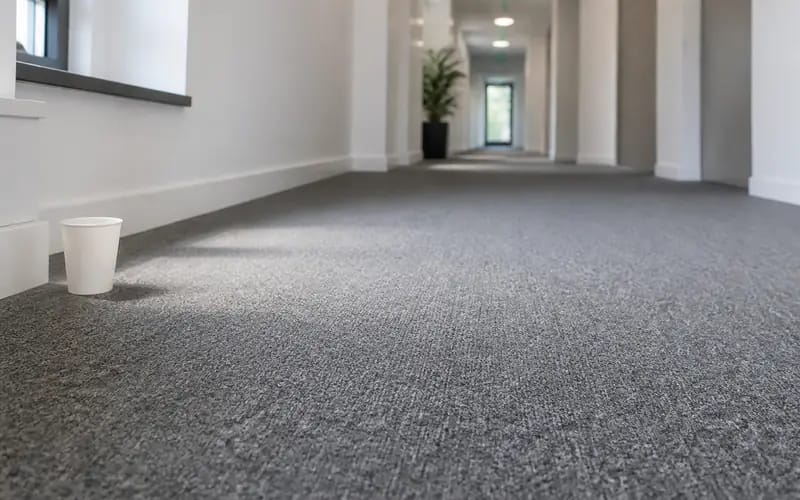
Protective treatments are usually applied to carpets after they have been deep cleaned by a professional. Should you treat your carpets after a good clean or is a good clean enough? The answer to this is that treatment does add another layer of protection to your carpets that a simple clean does not.
What A Protective Treatment Does
This fibre-sealant, or more commonly fluoropolymer, coating is applied to carpet after a professional clean. It forms a liquid-repellent layer on each carpet fibre. As long as you are able to blot the spill before it becomes a stain, the protective treatment will have done its job. The carpet will not be completely waterproof but you will have the extra few minutes required for the spill to form into a stain that can be removed by cleaning.
The Main Types Used Commercially
Stain-resist sprays are the most common treatment used for commercial properties and form a liquid-repelling surface on the fibres of the carpet. Soil retardants work by coating the fibres so that dry dirt and grit cannot get a grip on them. These types of treatments are typically used in areas such as entrance ways and corridors. Antimicrobial treatments are used in places like canteens, washrooms and other areas where there is a lot of food and moisture. They work by reducing the surface area that bacteria can multiply on between cleaning.
Why It Goes On After Cleaning, Not Before
A protective treatment needs to bond to clean fibres, not to dirt and grime and old residue already on the carpet. So, it makes sense that commercial carpet cleaners in Gloucester offer a protective treatment as a follow-on from a deep clean as a separate visit would only serve to seal in all the dirt and grime on the carpet already, rather than providing any real protection to the carpet itself.
How Often It Needs Reapplying
Reapplication frequency is dependent upon footfall, so areas with the highest amount of foot traffic such as entrance matting, corridors and walkways will require retreatment within 6-12 months, whereas quieter offices and meeting rooms could be left for 2 years +. It is also worth highlighting the high wear areas on a floor to be treated separately and allow for more budget to be allocated to these areas, as this is where the treatment will receive the most use.
Which Areas Benefit Most
Most facilities managers recognise the importance of protecting key areas of carpet such as reception areas that are exposed to mud and wet umbrellas. Meeting rooms are also typically treated as they are the first area to receive severe staining and are generally visible to clients. Canteens are treated with an antimicrobial solution as there is a high risk of food and drink being spilled and then staining the carpet. Other main walkways are also typically treated with a soil retardant as these areas receive the highest volume of foot traffic. For Commercial Carpet Cleaners Gloucester, visit Into Cleaning.
The Cost Logic Behind Treatment
Carpet that has been protected is easier to clean and resists staining for longer. The carpet will wear evenly and grit will not get into the fibres of the carpet. In high wear areas such as receptions, it is common for carpets to be replaced early for wear that could have been prevented. The cost of treating a carpet is minimal when compared to the cost of an early replacement and will extend the life of your carpet, prevent waste and keep perfectly good carpet out of land fill.
What To Ask Before Booking Treatment
You should also ask which product will be used to protect your carpets and if it is a Stain-resist spray, a Soil retardant or an antimicrobial. Also it is worth asking about the drying time of the product used and if there will be any odour during and after application. It is also worth asking for a copy of the safety data sheet of the product that will be used so you know what will be used in your premises.
While treatment alone won’t solve an allergy problem in your commercial premises, by adding a layer to your carpet in between cleanings, the dirt from the floor will not have had the chance to penetrate and be ground in further, thus making the following clean more effective.
How To Tell When Protection Has Worn Off
Find out if your carpet still has protection applied by performing a simple test. Apply a small amount of water to a carpeted area that is not highly visible and see if the water simply beads on the surface of the carpet or if it soaks into the carpeting. Spills will also show up in the same way as above. If they used to sit on the carpet surface for a while before eventually soaking in, then the spill is now sinking into the carpeting much quicker than before and will likely stain. Performing this simple test every few months in high wear areas will reflect the industry’s best practice for carpet cleaning.
Protective treatments are not difficult to maintain. Just apply at the correct time and then reapply where necessary. Well looked after carpets look good for longer and require less cleaning and maintenance between visits.